
The Hero Archetype: How Art Reflects Struggles, Aspirations, and Victories
September 12, 2025
recent posts
Symbols Series

recent post
Symbols Series
The Hero Archetype: How Art Reflects Struggles, Aspirations, and Victories

recent posts
Case Studies

recent posts
Ruminations
recent posts
Announcements

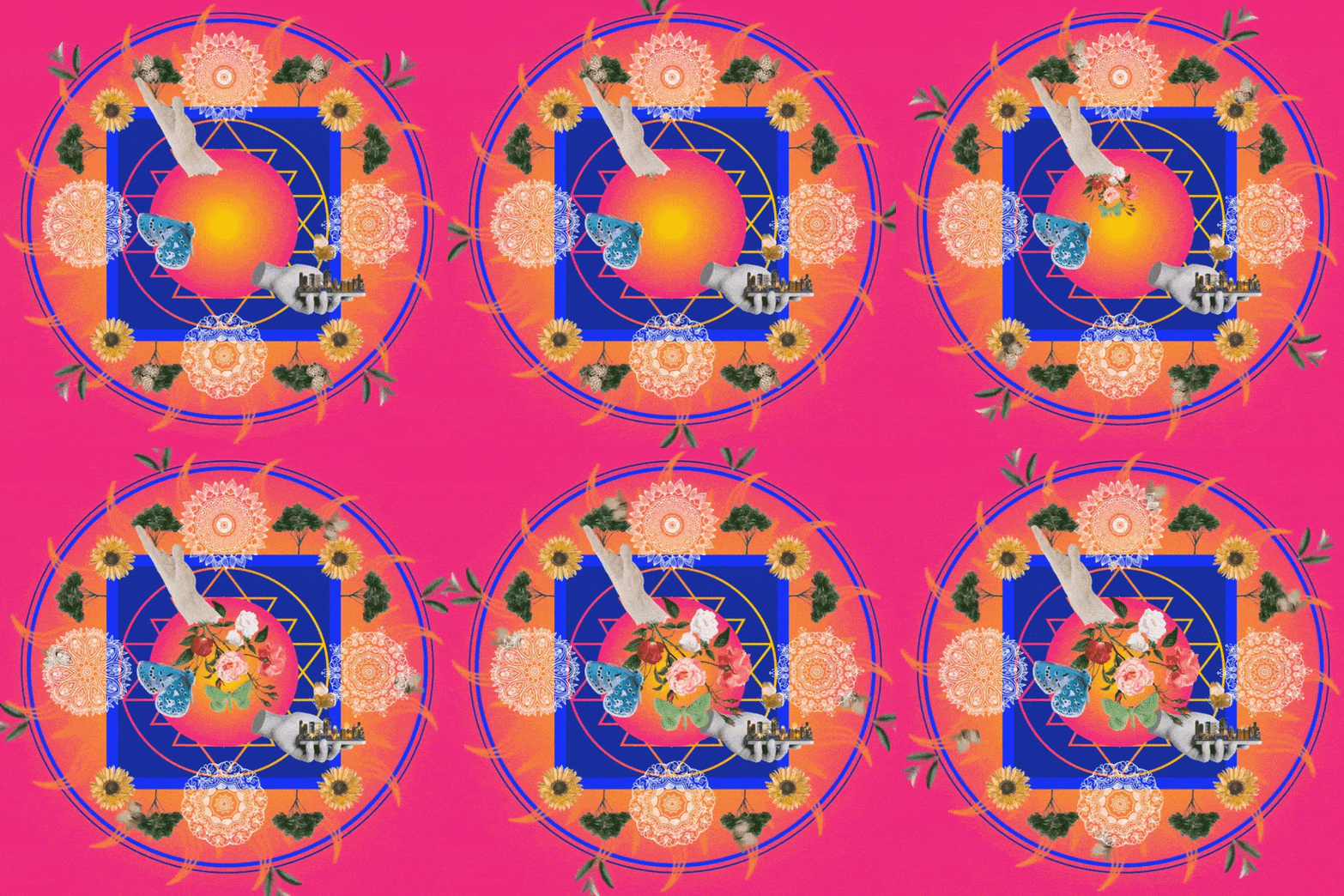
Paint the World is a 501(c)3 aiming to shift the paradigm around the impact potential of the arts. In 2021, PTW ran programs in 6 countries, engaging healthcare, education, and engineering professionals. Our Symbols Series is an exploration of archetypal symbols that arise from a community’s collective unconscious & how we can strategically use the appearance of these symbols in art to better understand community needs. To stay up to date on latest releases, follow us on instagram, and join us here.
Every culture, every era, and every medium of artistic expression has told the story of a hero. From ancient mythology to modern street murals, the Hero archetype embodies the struggle for power, honor, and transformation. In Carl Jung’s theory of archetypes, the Hero represents the individual’s quest for self-discovery, transformation, and the battle against adversity [1]. This journey, often marked by trials, sacrifices, and ultimate triumph, is deeply embedded in the collective unconscious, shaping myths, literature, and artistic traditions throughout history.
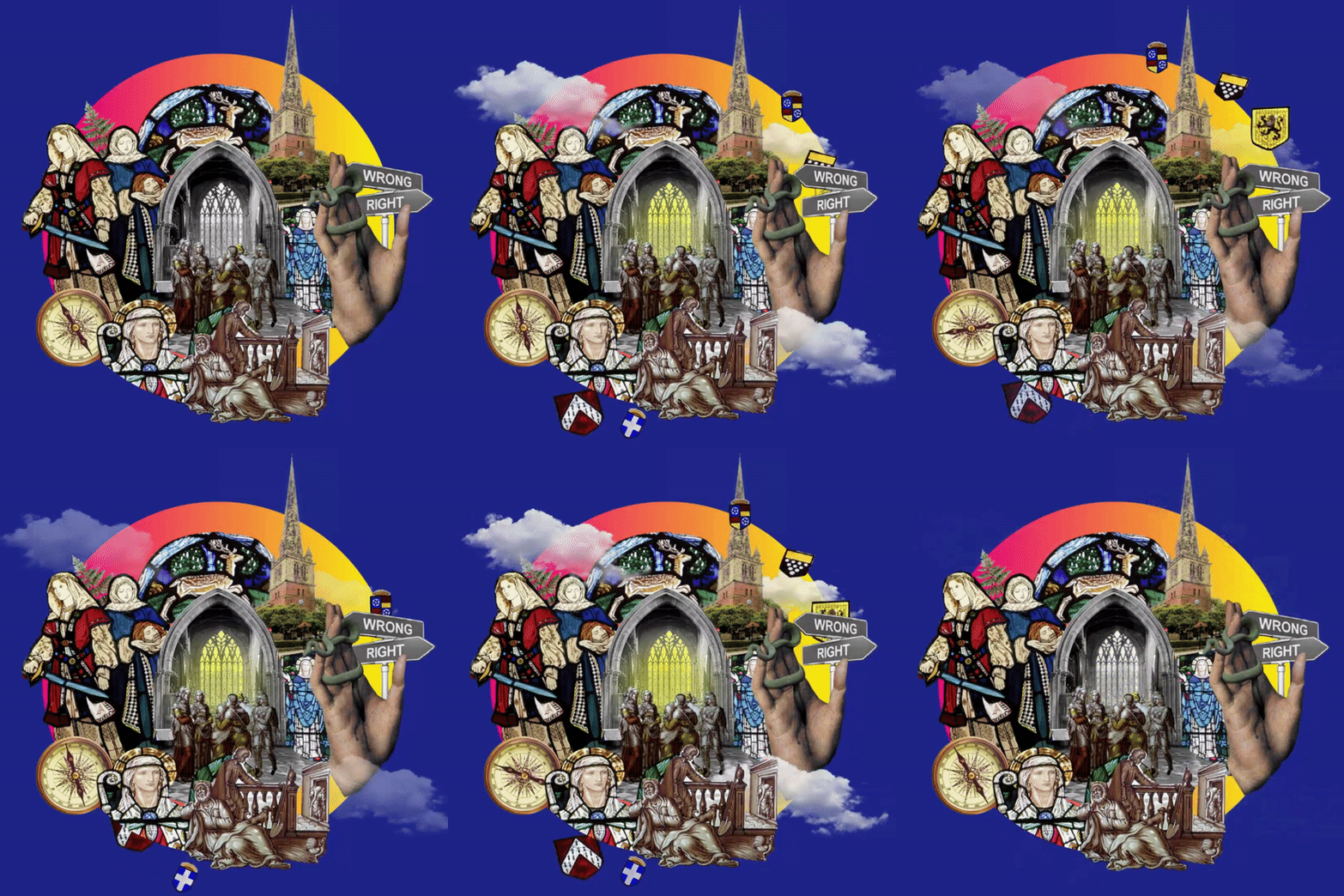
To see more gifs from Paint the World, visit us on Giphy here.
The Hero archetype has had a profound impact on storytelling, influencing religious doctrines, cultural legends, and philosophical ideals for millennia. In ancient mythology, the Hero emerges as a figure destined for greatness like Perseus slays Medusa, King Arthur wields Excalibur, and Odysseus navigates trials to return home [2]. In religious traditions, figures like Moses, Buddha, and Jesus embody the Hero’s path, enduring suffering for the sake of enlightenment or salvation [3].
The Hero are warriors, rebels, and protectors; figures who push against impossible odds to shape the world around them. But the Hero’s story is not just an artistic trope; it is a mirror reflecting the aspirations and struggles of both individuals and entire communities.
The Hero in Historical Art
Throughout history, the Hero has been immortalized in sculptures, paintings, and literature. Greek and Roman statues depict gods and warriors like Achilles, Hercules, and Alexander the Great frozen in moments of triumph or defiance. These classical figures embody the Hero’s pursuit of greatness, often at the cost of their own humanity [4].
During the 18th and 19th centuries, artists continued to explore the Hero archetype through grand historical paintings. Alexander the Great Founding Alexandria (1736–1737) by Placido Costanzi captures the larger-than-life nature of the legendary leader, highlighting his role as a visionary and conqueror in the Baroque tradition [5]. Similarly, Jacques-Louis David’s Napoleon Crossing the Alps (1801) immortalizes Napoleon as a powerful and determined leader, framed by swirling drapery and a rearing steed, an icon of strategic brilliance and ambition [6].
Meanwhile, Russian painter Viktor Vasnetsov’s Knight at the Crossroads (1882) presents a different perspective on heroism: a lone knight contemplating his fate, standing at a moral and existential crossroads. This piece emphasizes the internal struggle of the Hero, where choices define destiny just as much as actions do [7].
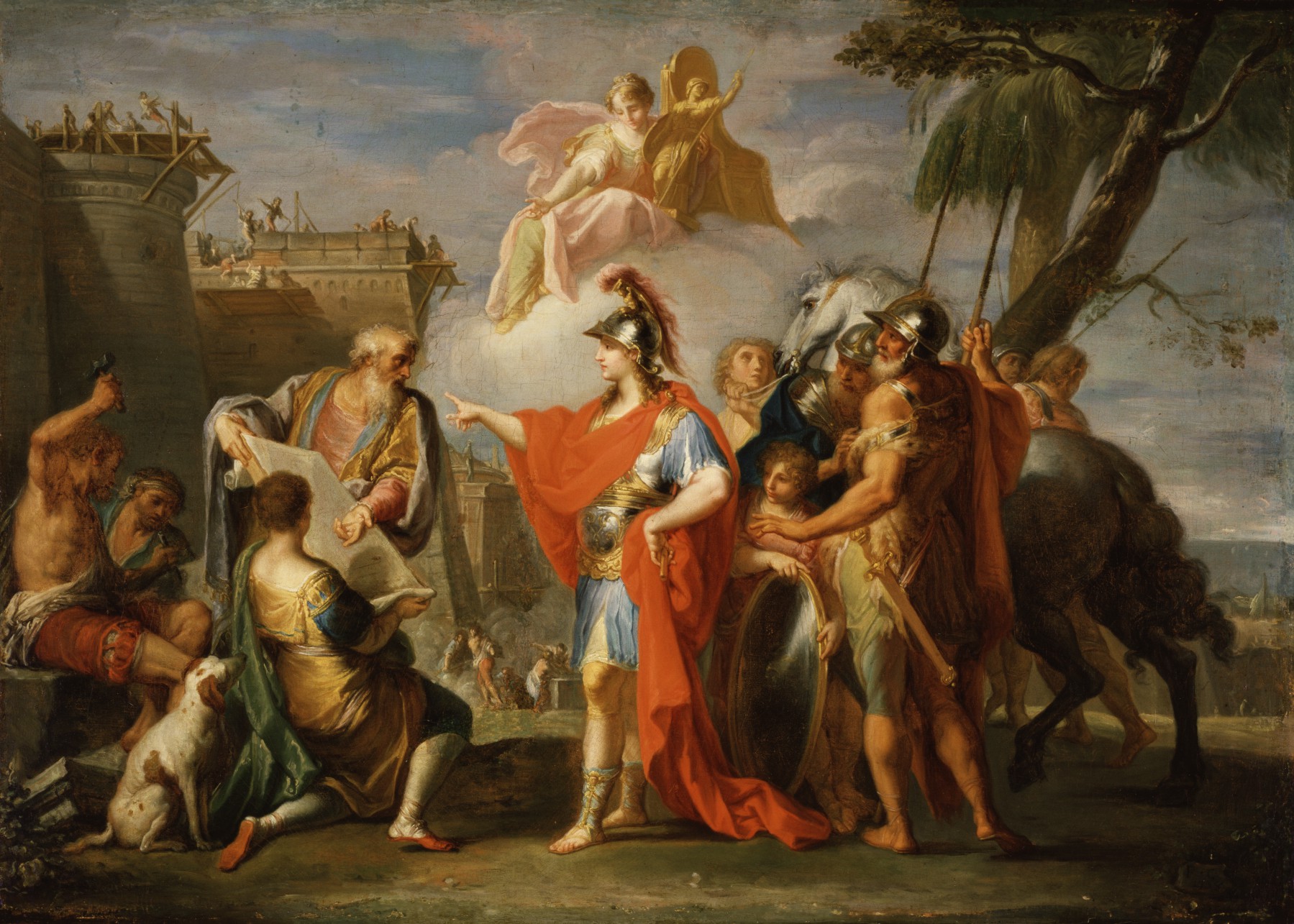
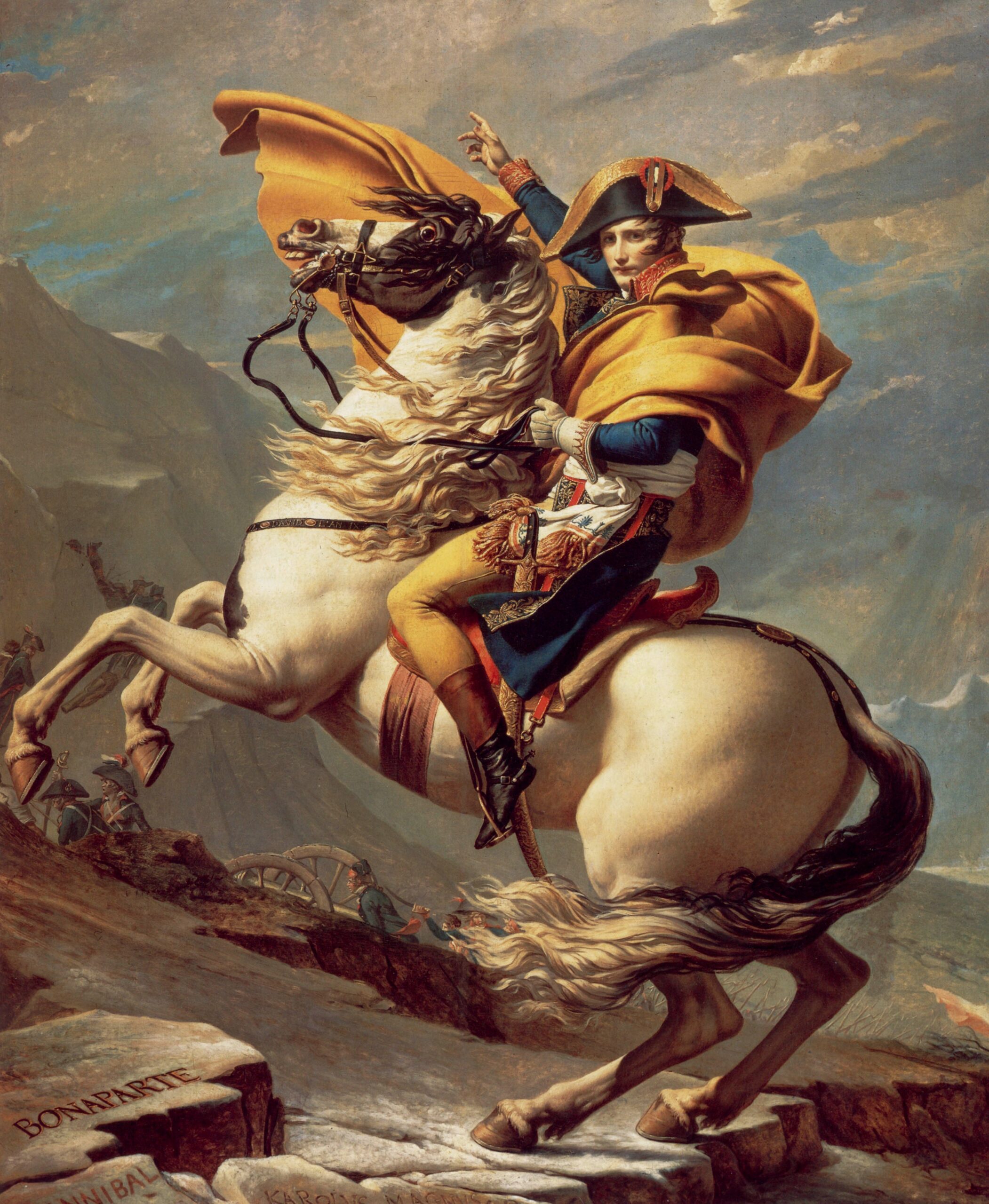
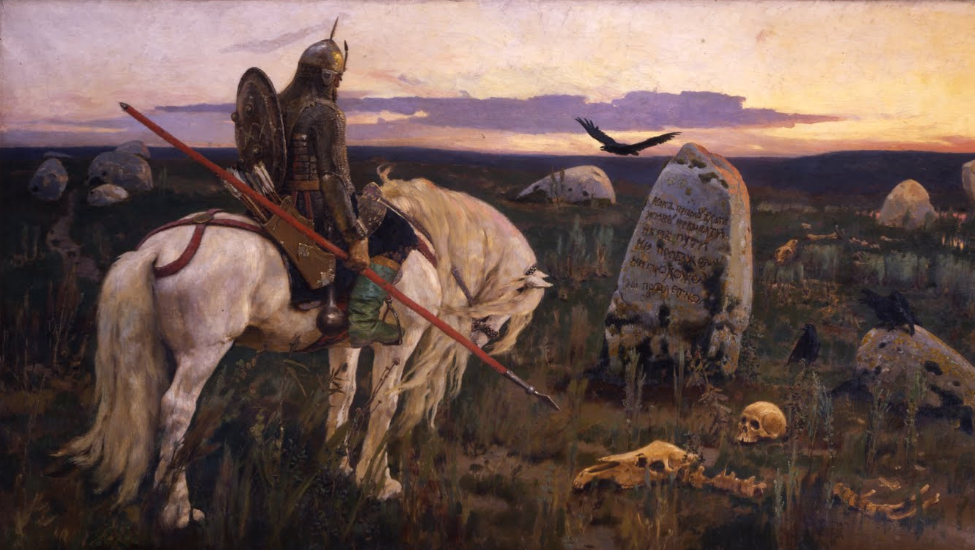
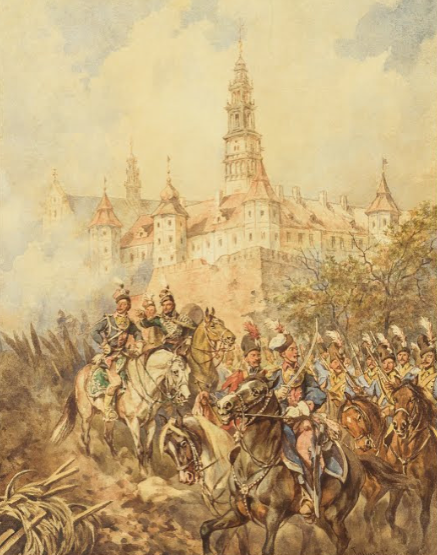
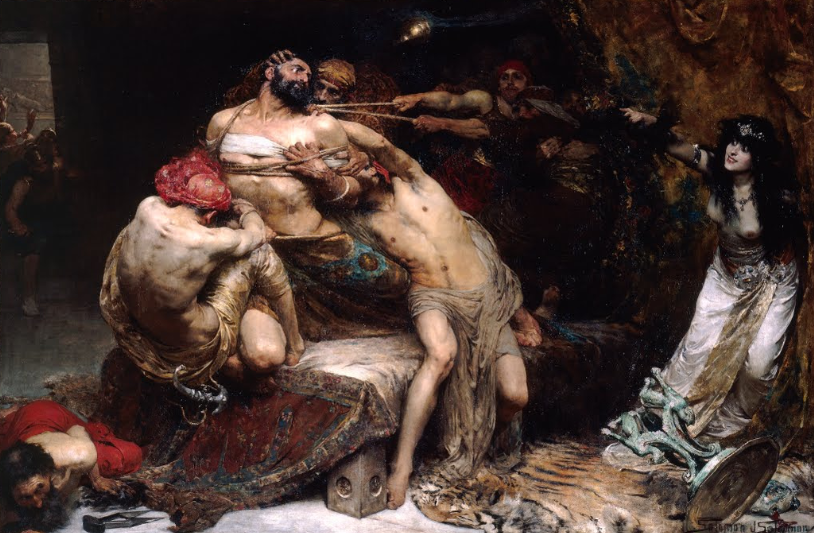
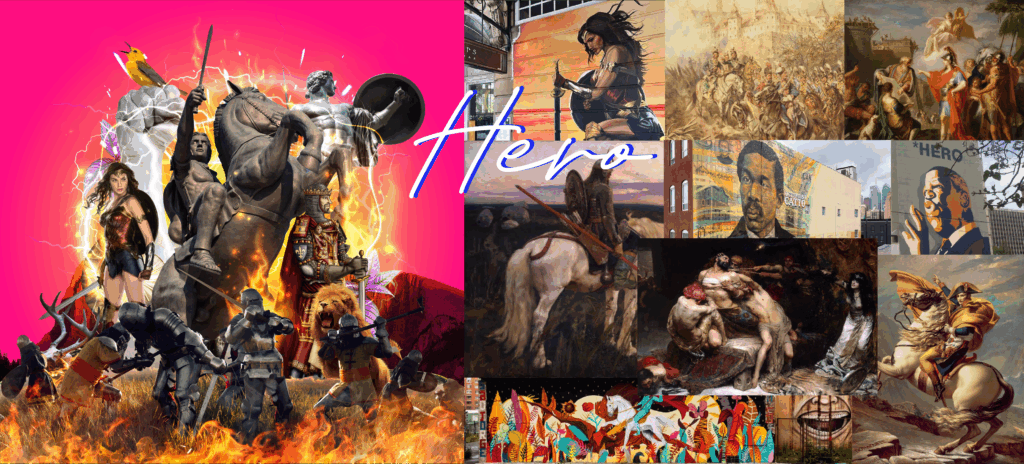
From left to right image: Alexander the Great founding Alexandria by Placido Costanzi (1736-1737) Baroque; Napoleon Crossing the Alps (Napoleon at the Saint-Bernard Pass) by Jacques-Louis David (1801); Knight at the Crossroads by Viktor Vasnetsov in Russia (1882); Pułaski at Częstochowa (Episode from Bar Confederation times) by Juliusz Kossak (1877); Samson by Solomon Joseph Solomon (1887)
The Hero in Street Art
The streets are filled with heroes. Graffiti artists and muralists have long used the Hero archetype to inspire and challenge. In Russia, Thiago Mazza’s George the Victorious (2016) reimagines the legend of Saint George slaying the dragon, fusing classical heroism with contemporary street art aesthetics [8]. Similarly, in Philadelphia, Keir Johnston and Willis “Nomo” Humphrey’s Remembering a Forgotten Hero (2018) honors Octavius Catto, a civil rights leader whose story had faded into obscurity, transforming an overlooked figure into a powerful symbol of resilience and justice [9].
Meanwhile, in Atlanta, Sean Schwab’s John Lewis Hero Mural pays tribute to the late congressman and activist, casting him as a modern-day warrior for equality and change. The vibrant, larger-than-life portrait serves as a reminder that heroism is not just about grand conquests but about standing firm in the face of adversity [10].
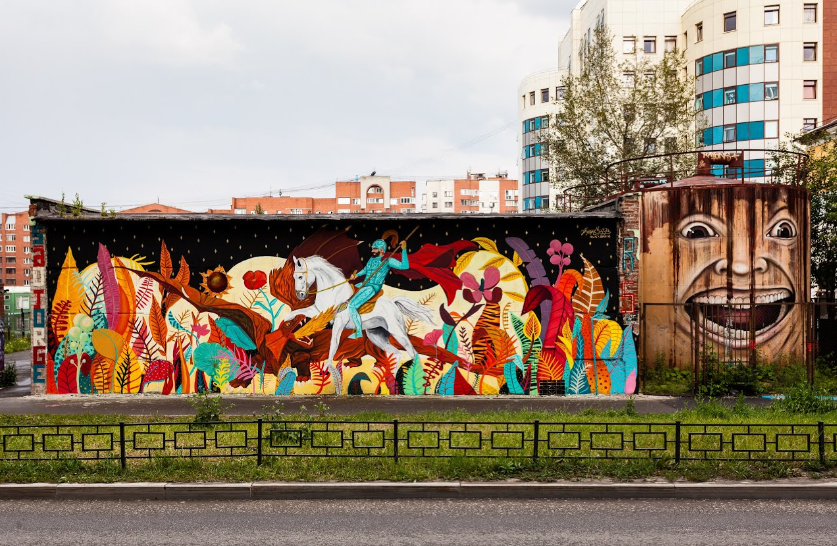
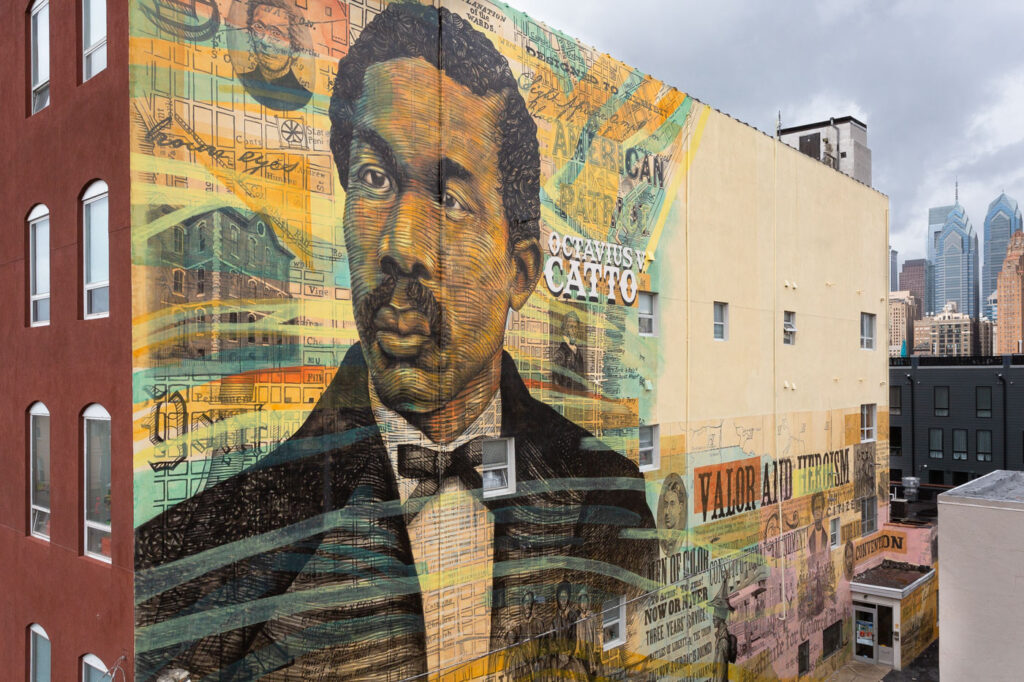
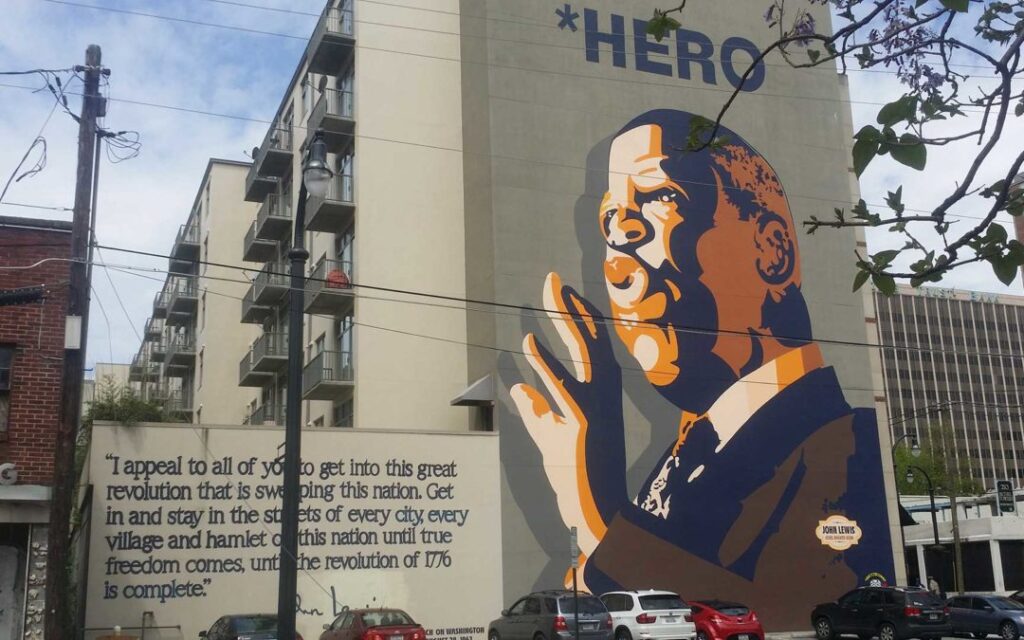
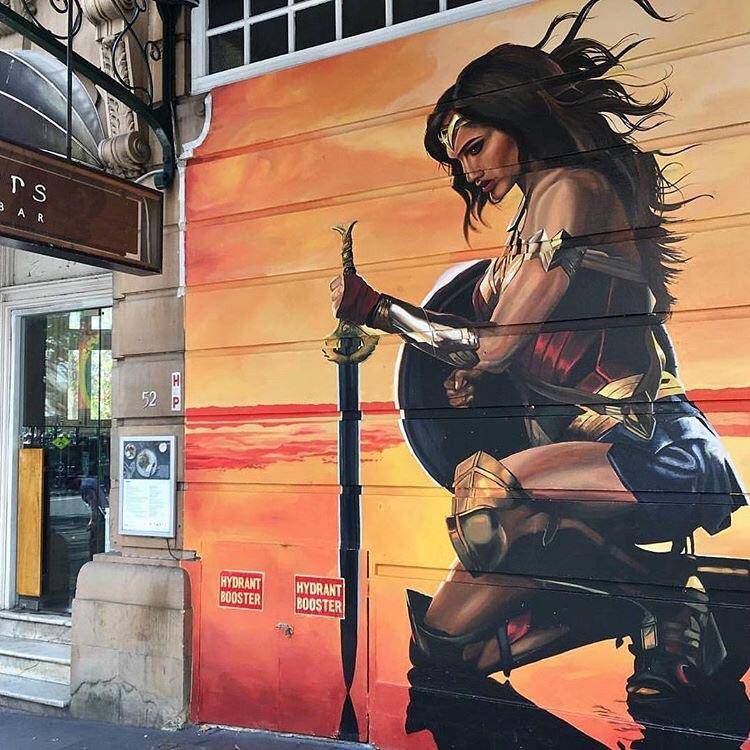
From left to right image: George the Victorious by Thiago Mazza in Rusia (2016); Remembering a Forgotten Hero by Keir Johnston and Willis “Nomo” Humphrey_Philadelphia, PA (2018); _John Lewis Hero Mural by Sean Schwab in Atlanta, Georgia; Wonderwoman Mural in Sydney, Australia
The Hero in Community: Understanding Through Art
In a community, the artistic representation of the Hero archetype can reveal collective values, struggles, and aspirations. A mural of a local activist can transform public perception, turning an overlooked figure into an icon of strength. The imagery of heroes in community art projects can foster identity, unity, and a sense of shared purpose.
In neighborhoods affected by violence or poverty, Hero-themed street art often serves as a rallying cry; a reminder that strength comes from within and that transformation is possible. In spaces of political upheaval, the Hero appears in protest art, urging people to fight for justice. Understanding who a community depicts as its heroes can offer deep insights into its history and future.
Lessons from the Hero Archetype: How It Shapes Our Lives
Heroes are not just found in books and murals; they live within us. The Hero archetype teaches us that power is not just about dominance but about perseverance. Carl Jung saw the Hero as a psychological force, an aspect of the self that pushes individuals to grow, to overcome obstacles, and to seek meaning [11].
The Hero’s journey reminds us that failure is not the opposite of success, but a necessary part of the path. Every setback, whether personal or societal, becomes a trial, an opportunity to refine our character. The sun, often associated with the Hero, symbolizes this resilience, a light that never truly fades despite darkness.
Recognizing the Hero within ourselves means embracing courage, whether that means standing up for a cause, taking risks in pursuit of a dream, or supporting others in their battles. Just as in art, where the Hero never stands alone, we, too, are shaped by those who journey with us.
Leave a Reply
recent post
Symbols Series
recent post
Case Studies
recent post
Ruminations
recent post
Announcements


If you are a current Paint the World Ambassador and you have misplaced the Ambassador Portal web address, please reach out to angela@painttheworld.com
If you would like to become a Paint the World Ambassador, please learn more here.