
The Mandala Motif in Art: Unity, Balance, and Transformation Across Time
September 9, 2025
recent posts
Symbols Series


recent post
Symbols Series
The Mandala Motif in Art: Unity, Balance, and Transformation Across Time
recent posts
Case Studies

recent posts
Ruminations
recent posts
Announcements

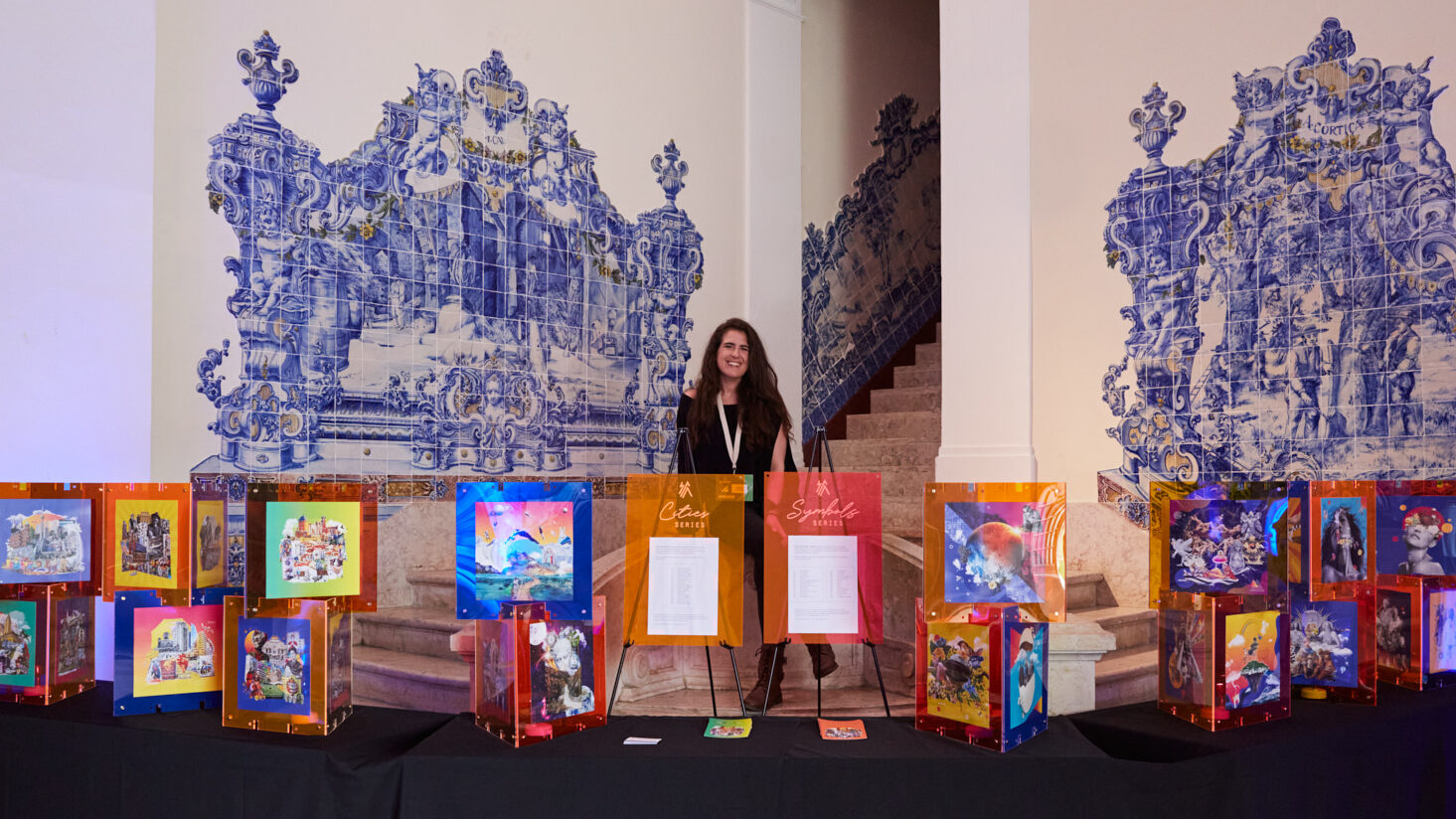
Paint the World is a 501(c)3 aiming to shift the paradigm around the impact potential of the arts. In 2021, PTW ran programs in 6 countries, engaging healthcare, education, and engineering professionals. Our Symbols Series is an exploration of archetypal symbols that arise from a community’s collective unconscious & how we can strategically use the appearance of these symbols in art to better understand community needs. To stay up to date on latest releases, follow us on instagram, and join us here.
A mandala, at its core, is a geometric design organized around a central point, often composed of repeating patterns, circles, and symmetry. Found in spiritual traditions from Hinduism and Buddhism to Native American sand paintings, it represents order, harmony, and balance.
In the vast expanse of human creativity, the mandala has become more than a design, it is a symbol of universality and transformation, reflecting the structure of the cosmos, the psyche, and the journey toward self-realization. From Tibetan sand mandalas to contemporary urban murals, the motif continues to evolve as a sacred artistic expression, inviting us to step into its intricate patterns and discover meaning within its symmetry.
Swiss psychoanalyst Carl Jung brought the mandala into the realm of psychology, recognizing its spontaneous emergence in patients’ artwork. Jung saw it as a reflection of the self, a symbol of individuation and inner unity (Jung, C.G., The Archetypes and the Collective Unconscious, 1959). Artists like Hilma af Klint and Kandinsky incorporated mandala-like structures in their compositions, using circles to depict spiritual transcendence (Ager, D., Hilma af Klint: A Pioneer of Abstraction, 2020).
To see more gifs from Paint the World, visit us on Giphy here.
The Mandala in Art History
The mandala has appeared in art for thousands of years, often as a bridge between the material and spiritual realms. In Hinduism and Buddhism, mandalas serve as meditation aids, guiding practitioners toward enlightenment. The intricate sand mandalas of Tibetan monks, meticulously created and then destroyed, symbolize the impermanence of existence (Brauen, M., The Mandala: Sacred Circle in Tibetan Buddhism, 1997).
The Buddhist deity Vajra Tara (1075–1200) integrates mandala structures within divine iconography, reinforcing the archetype’s connection to transcendence [1]. Several historic masterpieces further illustrate this deep-rooted spiritual significance; The Four Mandalas of the Vajravali Cycle (15th century) and Guhyasamaja Manjuvajra Mandala (16th century) showcase the elaborate cosmological frameworks used in Buddhist rituals [2]. Later works, such as the Mandala of Amitayus, the Buddha of Eternal Life (18th century), highlight the mandala as a conduit for spiritual longevity and divine wisdom [3].
These examples trace the mandala’s evolving role from divine embodiment, to ritual cosmology, to a symbol of eternal life; revealing how its patterns continually mediated between the temporal and the transcendent.
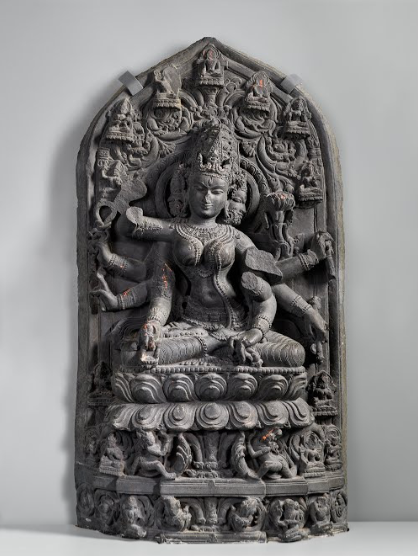
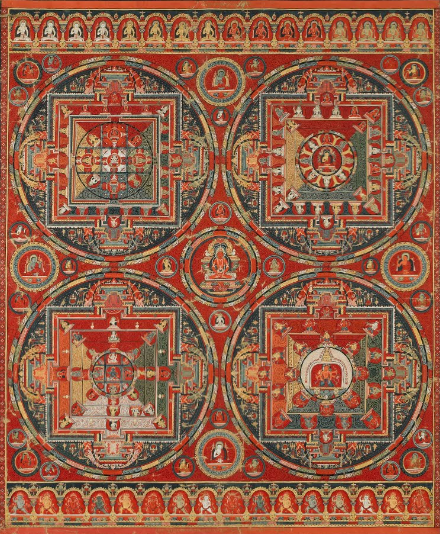
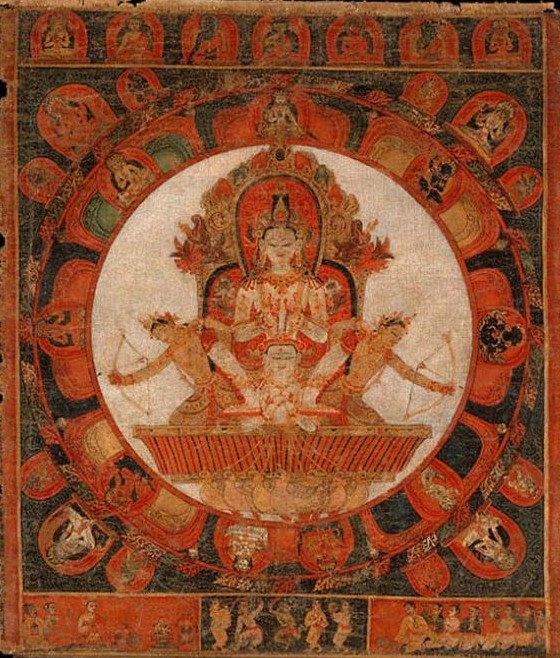
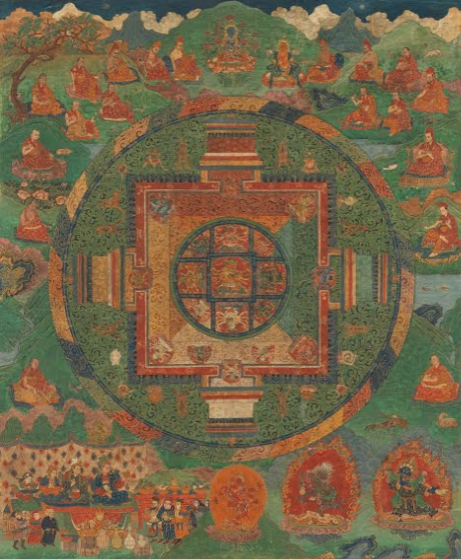
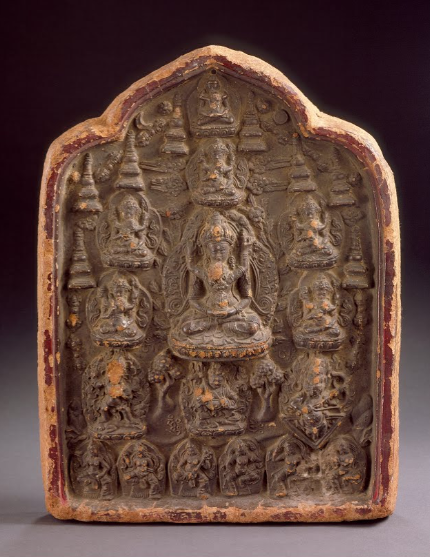
From left to right image: The Buddhist deity by Vajra Tara(1075-1200); The Four Mandalas Of The Vajravali Cycle (15th Century); Guhyasamaja Manjuvajra Mandal (16th Century); Mandala of Amitayus, the Buddha of Eternal Life (18th century)
The Mandala in Street Art: A Circle of Cultural Expression
Mandala-inspired designs are now a staple of street art, where they merge ancient symbolism with contemporary aesthetics.
In India, street artists incorporate rangoli-style mandalas into their work, maintaining a centuries-old tradition of ephemeral geometric art created during festivals (Gupta, R., The Ritual Art of Rangoli, 2018). This continuity of sacred geometry reemerges in modern contexts across the globe: the Mandala Mural in the Barranco District of Lima, Peru, blends indigenous motifs with geometric symmetry to reflect the city’s rich cultural tapestry [4], while Luke Grey’s Mandala Mural on St. Matthew’s Row in Hackney, London, transforms an urban space into a meditative visual sanctuary [5]. Together, these works reveal how the mandala persists as a living archetype, reshaping city walls into spaces of reflection, connection, and cultural memory.
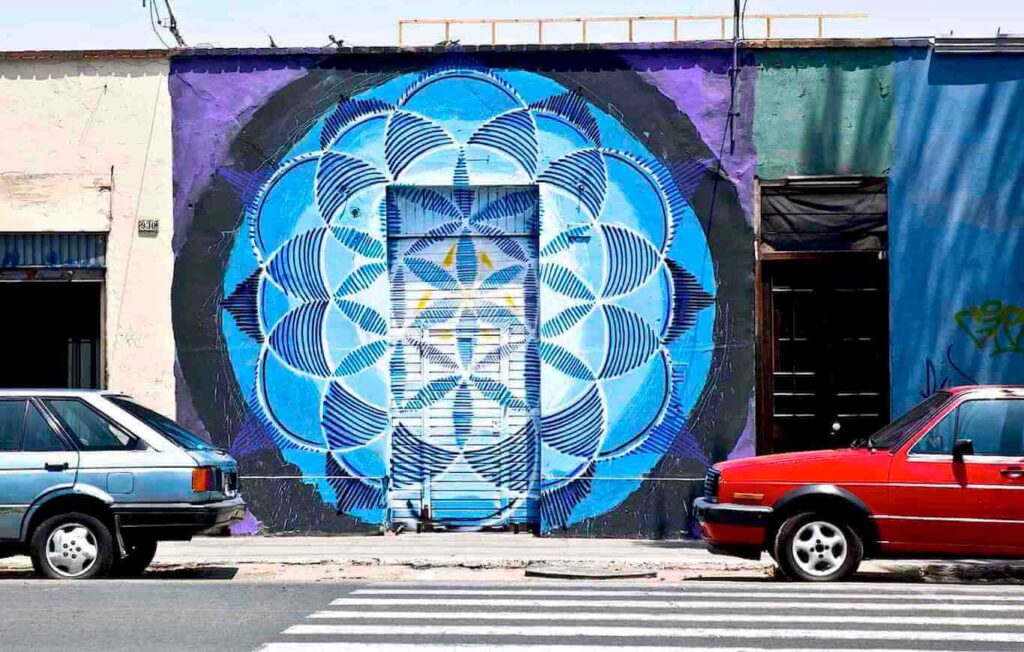
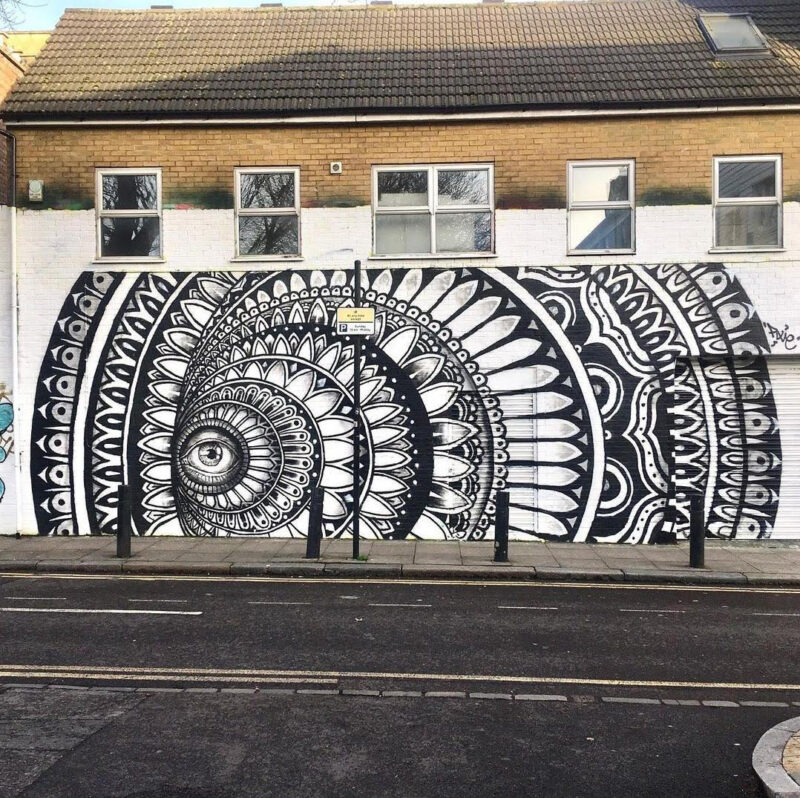
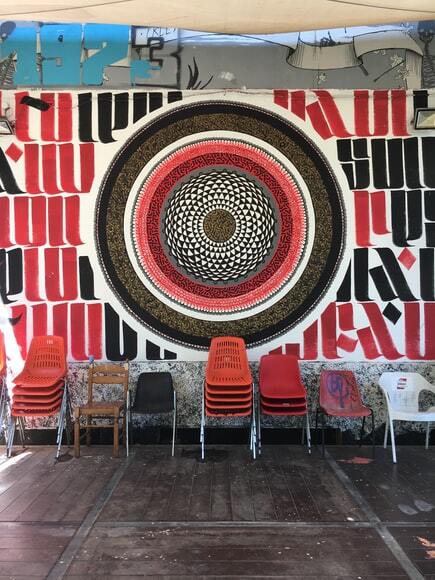
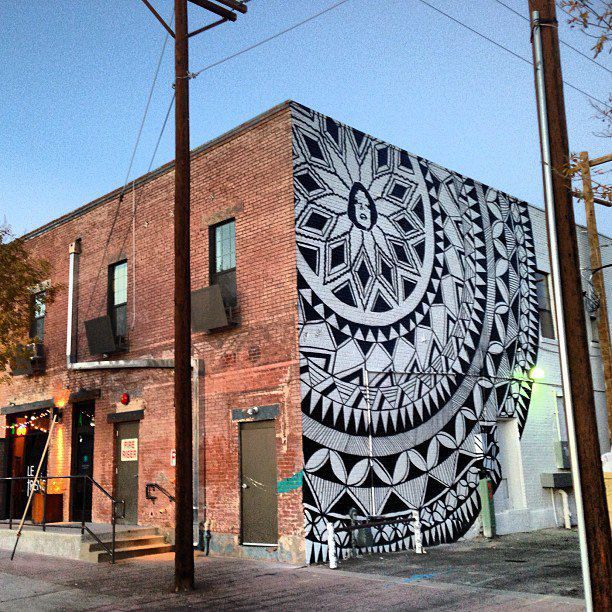
From left to right: Mandala Mural by Barranco District of Lima in Peru; Mandal Mural by Luke Grey in St Matthew’s Row, Hackney, London; Baricentric by FabioSantanielloBruun in Milano,Italy; A Mandala Mural by EXIST1981 in El Paso Texas
Bring Meaning to Your Space
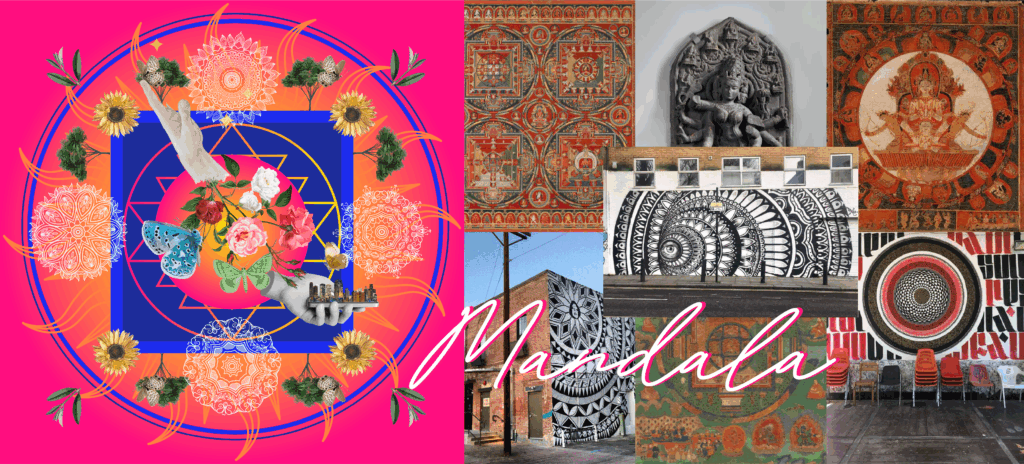
The mandala is more than a visual motif; it’s an invitation to center yourself in the midst of life’s complexity. To bring this timeless symbol into daily life, we’ve created an exclusive Mandala Art Print, inspired by the archetype’s enduring themes of balance and transformation.
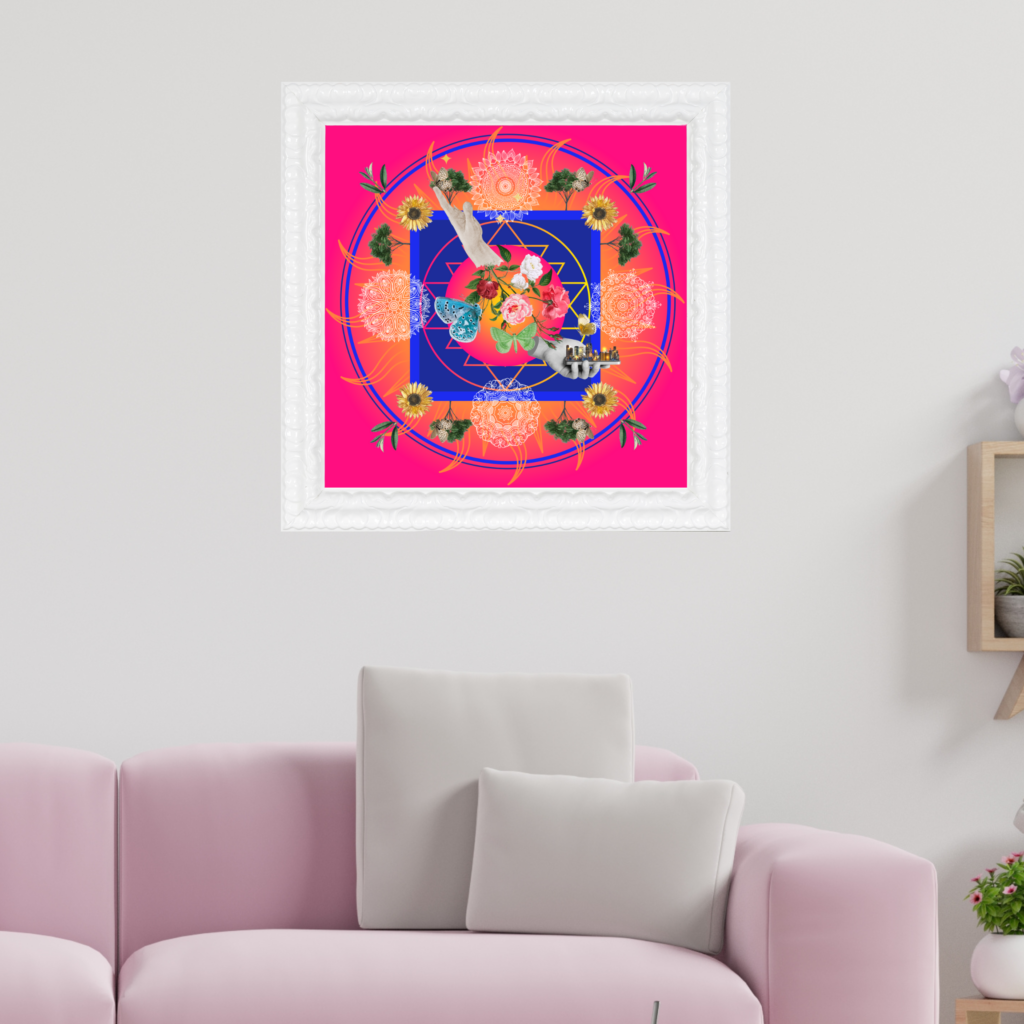
Perfect for a home, studio, or meditation space, this piece serves as a daily reminder of harmony, grounding, and wholeness. Owning the print is not just about decor, it’s about keeping the circle of renewal and reflection close at hand.
✨ Explore the print here: Mandala Art Print
🌐 Discover more archetype-inspired art: Paint the World Shop
Mandalas as Windows into Communities
The Mandala, a symbol of wholeness and unity, can serve as a tool for understanding a community by revealing its collective consciousness, cultural values, and social dynamics. Carl Jung described the mandala as an archetype of the Self, reflecting psychological integration and harmony within individuals and groups [6].
When a community engages in mandala creation, the artistic process can highlight shared beliefs, historical narratives, and unspoken tensions. Anthropologists have used mandalas to study indigenous and spiritual traditions, noting their role in community healing and identity formation [7]. Moreover, participatory art projects centered around mandalas can foster dialogue and collaboration, uncovering patterns in community concerns and aspirations [8]. By analyzing the colors, symbols, and structures that emerge in communal mandalas, researchers and leaders can gain deeper insights into the emotional and social fabric of the people involved.
Applying Learnings
The mandala is more than an artistic motif; it is a tool for self-reflection and mindfulness. Engaging with mandalas whether by drawing, coloring, or meditating upon them allows us to center our thoughts and embrace a sense of inner order. Psychologists recommend mandala creation as a therapeutic practice, helping individuals cope with stress and enhance focus (Henderson, P., Visual Journaling and the Power of the Mandala, 2005).
From a philosophical perspective, the mandala reminds us of balance between chaos and order, past and future, self and universe. It teaches us that even within complexity, a harmonious whole can emerge.
The mandala is a living symbol, an ancient yet ever-relevant, spiritual yet deeply personal. Whether in the halls of a temple, the stained glass of a cathedral, or the concrete canvas of a city wall, it speaks a universal language of unity and transformation. And in its enduring circle, we are reminded that the search for meaning is not linear but eternal; always returning us to the center, where wholeness begins.
Leave a Reply
recent post
Symbols Series
recent post
Case Studies
recent post
Ruminations
recent post
Announcements

If you are a current Paint the World Ambassador and you have misplaced the Ambassador Portal web address, please reach out to angela@painttheworld.com
If you would like to become a Paint the World Ambassador, please learn more here.