Blog
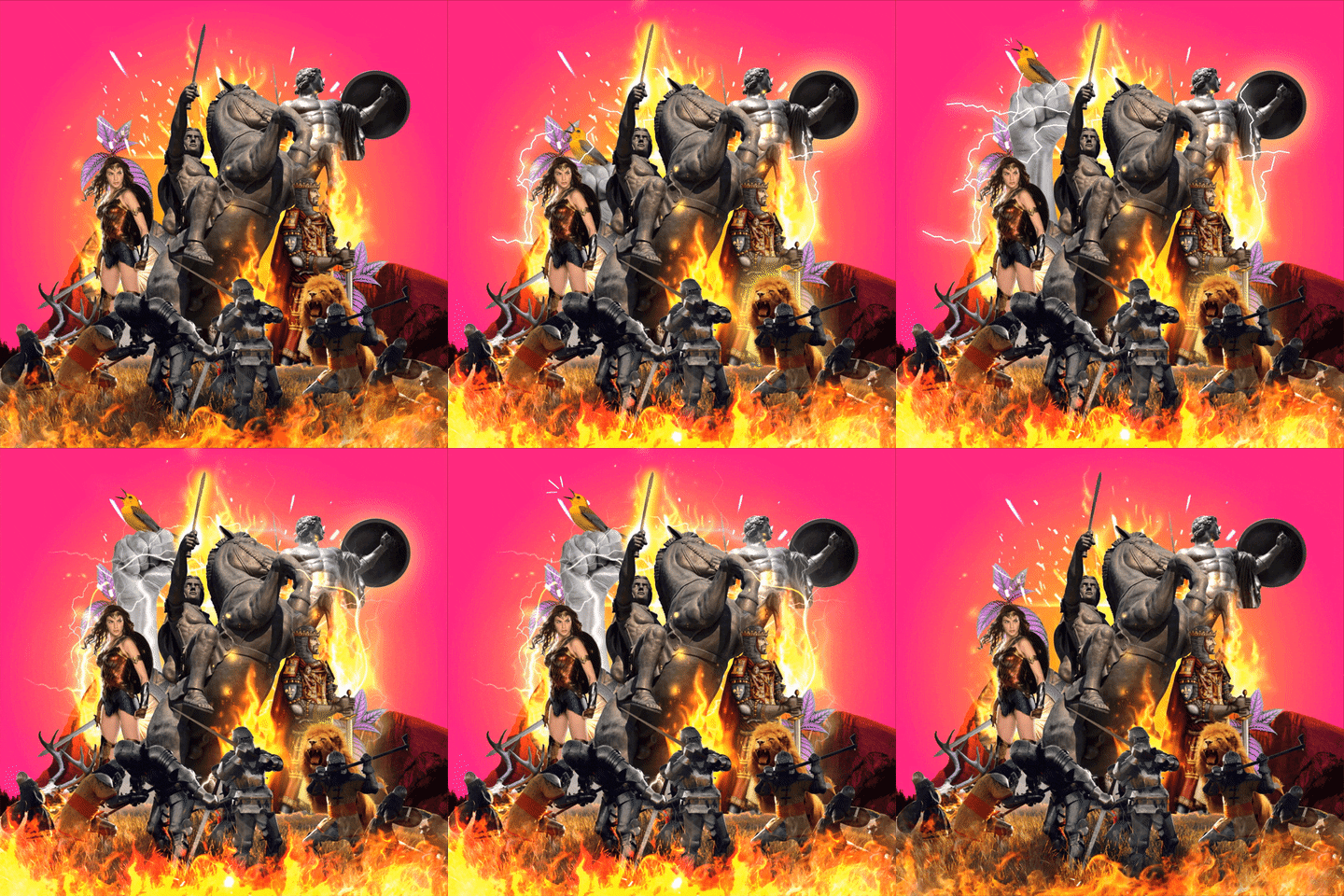
From the earliest tales of human endeavor, the Hero emerges as a symbol of courage and relentless pursuit. Driven to confront challenges and protect what matters most, their journey inspires both triumph and caution, revealing the fine line between bravery and hubris. The Hero embodies collective aspiration, reflecting a shared commitment to justice, unity, and the enduring human drive to overcome adversity.
September 12, 2025
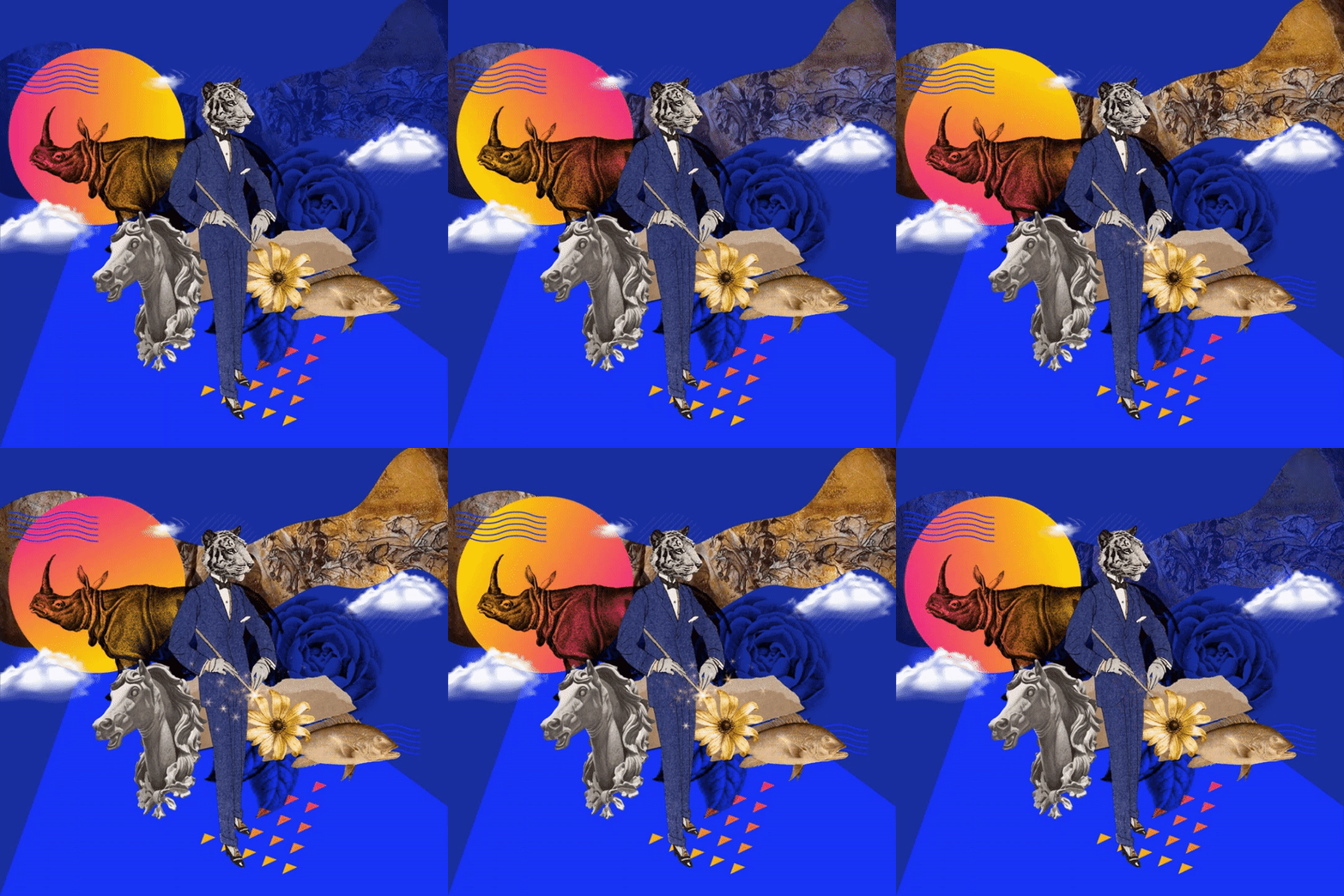
From the earliest stirrings of human awareness, animals have mirrored our instincts, emotions, and capacity to adapt. Jung saw them as keepers of sacred wisdom, attuned to nature’s hidden balance and beyond moral constraint. Across cultures and centuries, art has captured this bond, and in community creations, the Animal archetype embodies shared values, collective memory, and enduring truths that connect past, present, and future.
September 9, 2025
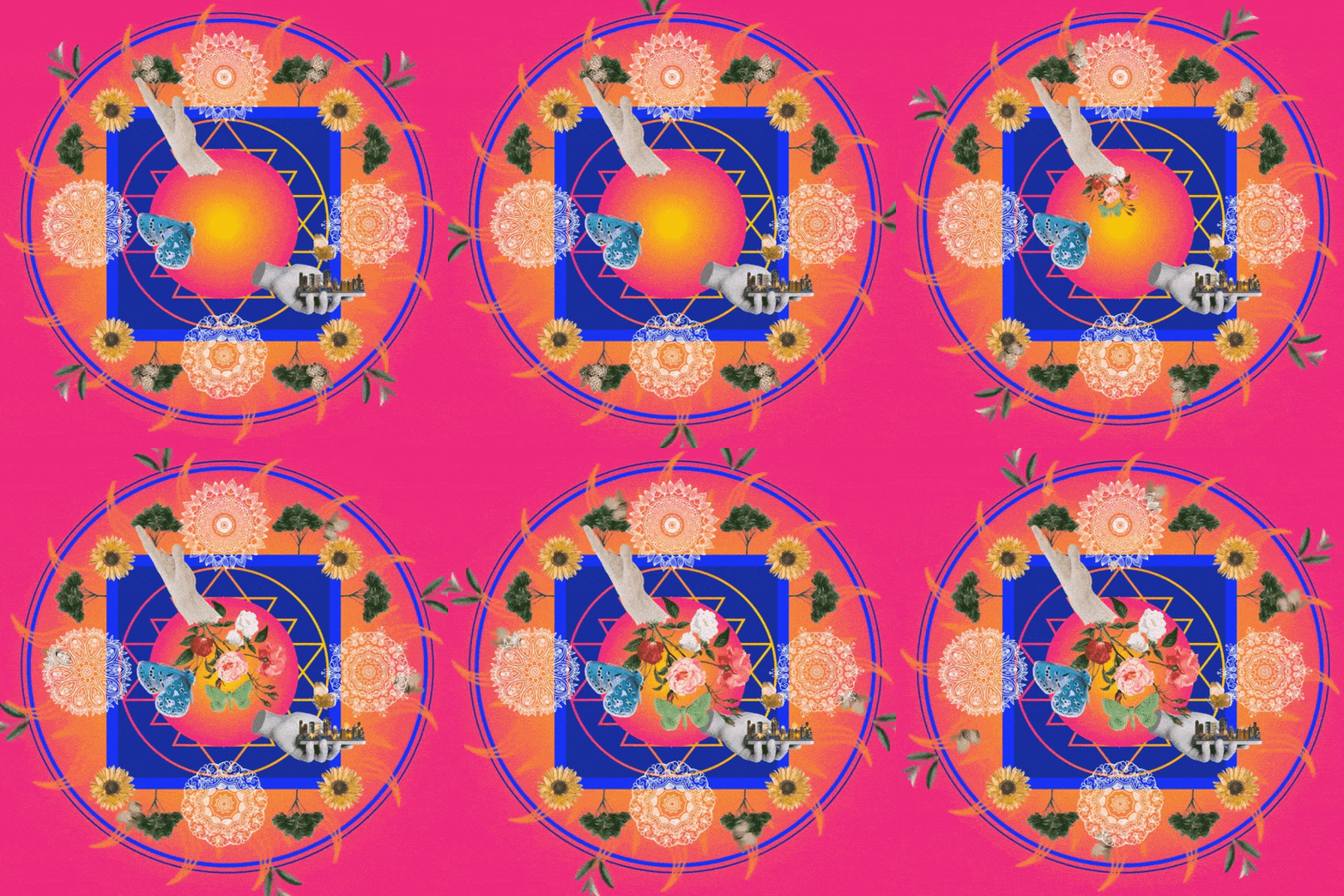
Since ancient times, the mandala has symbolized the journey toward wholeness, reflecting the delicate balance of our inner energies. Its circular form embodies harmony, unity, and the interconnectedness of conscious and unconscious life. Across cultures and practices, mandalas guide self-awareness and spiritual growth. The mandala translate this personal journey into a shared experience, inspiring balance, unity, and connection that bridges individual and collective consciousness.
September 9, 2025

From the earliest stages of life, the Child embodies innocence, wonder, and the limitless potential of growth. Symbolizing new beginnings and hope, it reminds us of the need for care and nurturing. The Child archetype becomes a reflection of collective aspiration, expressing curiosity, optimism, and a shared commitment to fostering safe, inspiring spaces where both individuals and communities can flourish.
September 9, 2025
The Anima/Animus archetype represents the inner balance of masculine and feminine energies within each individual, a concept first explored by Carl Jung. In art, it often appears as a union of opposites—like the Hindu deity Ardhanarishvara or contemporary works blending alchemical and symbolic imagery.
September 1, 2025
From the dawn of humanity, the concept of birth has held the ultimate significance as it marks our closest experience to creation and therefore — what many civilizations have believed — is our closest means of understanding life itself. It has thus been used in numerous artistic expressions, whether through references to actual childbirth or the metaphoric use of the concept in conveying new beginnings.
March 27, 2022
An ancient theme within many mythologies, the concept of rebirth and resurrection has been a prominent motif in the art world for centuries. The idea of coming back from the dead is not only found in religion, but also features prominently in Greek mythology where it is used as a literary technique to illustrate the concept that life goes on after death.
February 15, 2022


Transcending time and space, changing forms from culture to culture, the essence of the “Mother” archetype has undoubtedly remained intact. In Carl Jung’s analytical psychology, the primordial image of the generative and sustaining mother figure that has occurred repeatedly in various cultural concepts and myths since ancient times is sustained within the collective unconscious.
February 3, 2022
Our inner and outer aesthetic is made up of powerful archetypes that strategically appear in our lives over and over again. According to Dr. Carol S. Pearson, archetypes represent patterns, and patterns represent predictability. Jungian psychology centers largely around the concept of archetypes and how they play out in our lives.
January 25, 2022



If you are a current Paint the World Ambassador and you have misplaced the Ambassador Portal web address, please reach out to angela@painttheworld.com
If you would like to become a Paint the World Ambassador, please learn more here.